
Brand design for luxury brands is the strategic and creative process of building a visual identity, voice, and positioning that reflect a premium product or experience and justify a premium price. For founders hiring a partner, the right choice comes down to evaluating strategic rigor, creative craft, and proof of results, not just a portfolio of pretty logos.
Brand design at any level involves logos, color palettes, and typography. Brand design for luxury brands has to do more: it has to earn trust instantly, signal quality before a customer ever experiences the product, and hold up under intense scrutiny from a discerning audience that notices inconsistency.
A founder launching or repositioning a luxury hospitality concept, real estate development, healthcare practice, or retail brand is essentially asking design to do sales work before the sales team ever gets involved. That’s a higher bar than most general design engagements, and it changes what founders should look for in a partner.
Strategic foundation first. Serious brand design starts with positioning: who the brand serves, what it stands for, and how it’s differentiated from competitors. Agencies that jump straight to logo concepts without this groundwork tend to produce identities that look nice but don’t hold up strategically.
Craft and consistency. Typography, color, photography direction, and voice all need to work together across every touchpoint, website, signage, social media, print, without feeling disjointed.
Category fluency. A designer or agency should understand the specific expectations of your category. Luxury hospitality branding looks and feels different from luxury healthcare branding or luxury real estate branding, even though the underlying principles of premium design are similar.
Systems thinking, not just deliverables. The output should be a full brand system, guidelines, templates, and assets that a marketing team can actually use consistently, not just a one-time logo file.
Evidence of results. Ask for examples of brands that grew, repositioned successfully, or increased perceived value after the rebrand, not just examples that look good in a portfolio.
A few signals tend to predict a disappointing brand design engagement:
If a design partner can’t explain why a color palette or typeface choice supports the brand’s positioning, that’s a sign the work is decorative rather than strategic.
Brand design investment depends on scope: a logo refresh costs far less than a full repositioning that includes strategy, naming, messaging, and a complete visual system. Founders should budget separately for strategy and discovery, visual identity development, brand guideline documentation, and rollout across existing marketing assets (website updates, signage, packaging, social templates).
Be cautious of quotes that seem unusually low; they often exclude strategy work entirely and jump straight to visual production, which tends to produce a brand that looks fine in isolation but doesn’t hold up under real business pressure.
West Palm Beach, Palm Beach Gardens, Boca Raton, and the broader South Florida market are saturated with premium hospitality, lifestyle, healthcare, retail, and real estate brands competing for the same affluent audience. Standing out requires a brand identity that reflects genuine understanding of this market’s visual expectations and competitive landscape, not a generic luxury template applied without local context.
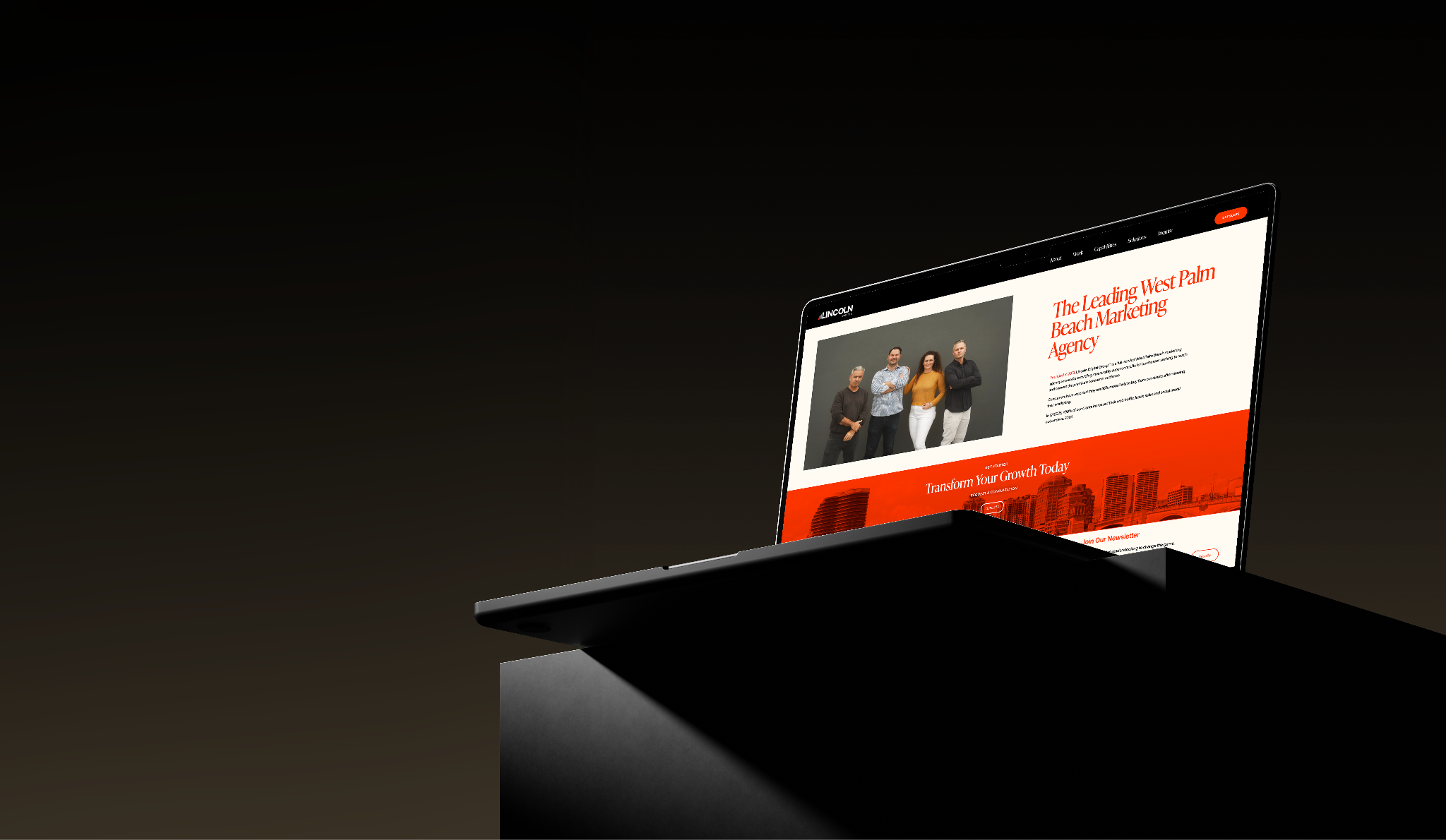
Lincoln Digital Group has led brand strategy and design work for premium South Florida brands like Wellington Florist and Stiebel Eltron, pairing strategic positioning with creative execution so the resulting brand identity holds up across every channel, from web design to social-first creative to paid media. Since 2022, that combination of strategy and craft has helped keep client retention above 85%.
Costs vary widely based on scope, whether the project includes naming, full strategy, and rollout across multiple channels, or just a visual refresh. A qualified partner will scope pricing after understanding your specific goals rather than quoting a flat rate upfront.
Most full brand design engagements, including strategy, identity development, and guidelines, take between six and twelve weeks. Projects that skip strategy can move faster but often require costly revisions later.
A logo designer typically delivers a visual mark. A brand design agency delivers a full strategic system, positioning, messaging, visual identity, and guidelines, built to support the business across every marketing channel, not just a single asset.
It depends on whether your current positioning still reflects your business. If the strategy and messaging are strong but the visual identity feels dated, a focused visual refresh may be enough. If the positioning itself has shifted, a fuller rebrand is usually the better investment.
If you’re ready to hire a partner who treats brand design as a strategic investment rather than a design exercise, Lincoln Digital Group would welcome the conversation. Visit lincolndigitalgroup.com/contact-us/ to get started.