
A critical mass agency is a marketing partner capable of pushing a brand past the tipping point where growth becomes self-sustaining — enough visibility, demand, and repeat engagement that momentum compounds instead of requiring constant paid fuel. The best ones differ from average agencies in how deliberately they engineer that tipping point, rather than simply running more ads and hoping volume adds up.
Critical mass, in a marketing context, describes the point at which a brand’s audience, content footprint, and reputation are large and consistent enough that growth starts feeding itself — referrals increase, organic search compounds, and paid media works harder because the brand already has recognition behind it. Getting there is not about spending more money faster. It requires sequencing: building brand foundations before scaling paid spend, and making sure every channel reinforces the same positioning so the audience recognizes the brand across touchpoints instead of encountering disconnected messages.
When you are assessing whether an agency can actually deliver this kind of scale, look for:
Agencies that can show, not just describe, how they sequenced a brand’s growth are the ones capable of getting a client to critical mass rather than just keeping the lights on with steady tactical output.
The gap between an average agency and one built to drive critical mass usually comes down to three things: strategic patience, cross-functional coordination, and honest measurement. Average agencies often chase the next campaign without connecting it to a longer arc. The best agencies build a foundation — brand clarity, a strong web experience, a content engine — before pouring money into paid acquisition, because paid media performs far better once there is brand recognition to lean on. They also refuse to hide behind vanity metrics, since real momentum shows up in retention, referral rate, and organic growth, not just impressions.
Some warning signs show up early in the relationship. Be cautious of agencies that lead every conversation with media spend increases rather than strategy, that cannot explain how their channels reinforce one another, or that treat your brand’s positioning as an afterthought to be handled by a junior team. An agency chasing short-term wins to hit a quarterly number will rarely build the kind of sustained presence that gets a brand to critical mass. If the agency cannot describe what your brand looks like at scale — not just next month’s deliverables — that is a sign they are thinking in campaigns, not in growth trajectories.
Reaching critical mass is rarely cheap in the first few months, since it requires investment across strategy, creative, web, and paid media simultaneously rather than sequentially cutting corners. Costs are driven by the breadth of channels involved, the level of custom creative required, and the competitiveness of your category. Premium categories like hospitality, healthcare, and real estate in dense, high-value markets typically require more sustained investment before momentum becomes visible, but the payoff is a brand that no longer depends entirely on constant ad spend to generate demand.
South Florida markets — West Palm Beach, Palm Beach Gardens, Boca Raton, Riviera Beach — are dense with premium competitors fighting for the same high-value consumers. Reaching critical mass here means standing out among established hospitality, lifestyle, and real estate brands that already have loyal followings. An agency without direct experience in this specific competitive landscape has to learn it on your budget. A team that already understands local consumer behavior, seasonal demand shifts, and media costs in these markets can compress the timeline to real momentum considerably.
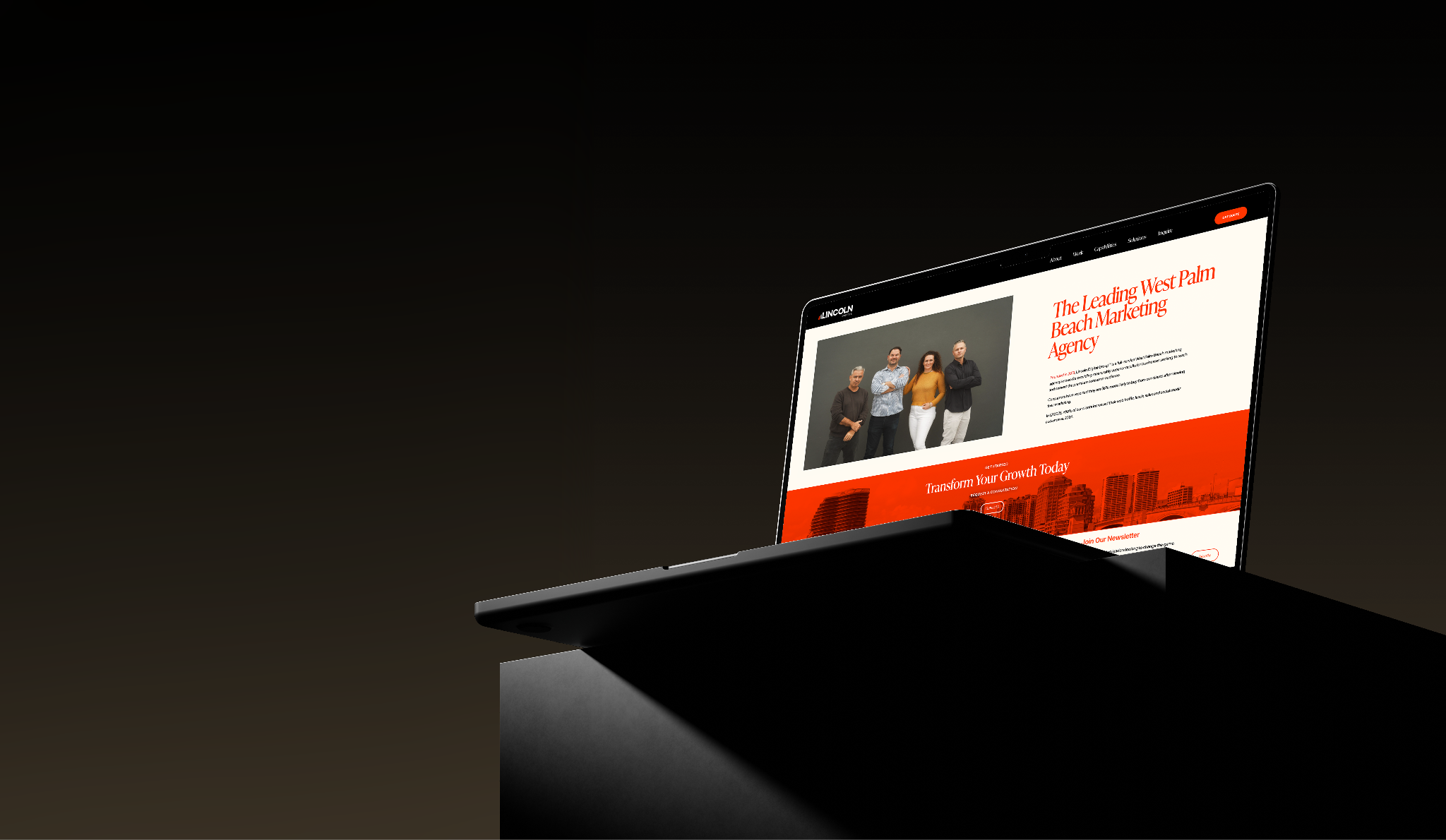
Lincoln Digital Group was founded in 2013 specifically to help premium, high-value-consumer brands grow through an integrated combination of strategic vision, branding, social-first creative, performance marketing, web design, and measurement. Since 2022, client retention has exceeded 85%, and 90% of clients grew their investment with LDG in the past 12 months — a strong signal that clients see compounding results worth reinvesting in. Work with brands like Nora West Palm, Cove Club, and Bradley’s Saloon reflects exactly the kind of phased, integrated approach that moves a brand toward critical mass rather than just running isolated campaigns.
It depends heavily on category and starting point, but most brands see early momentum within 6-9 months of integrated strategy, creative, and media work, with true compounding growth typically appearing after 12-18 months of consistent execution. Brands with strong existing reputations can move faster.
Running more ads increases short-term visibility but stops the moment spend stops. Critical mass means the brand’s organic search presence, reputation, and referral engine are strong enough that growth continues even when paid spend is paused or reduced.
Yes, but it requires disciplined sequencing rather than a bigger budget. Smaller brands often reach critical mass faster within a defined local or niche market than large brands trying to compete nationally, because the audience needed to create momentum is smaller.
Look for rising organic search traffic without matching paid spend increases, growing branded search volume, increasing referral and repeat-customer rates, and reduced cost-per-acquisition over time as brand recognition does more of the work.
If you are looking for a partner capable of getting your brand to real, sustained momentum rather than another round of short-term campaigns, Lincoln Digital Group would welcome the conversation. Visit lincolndigitalgroup.com/contact-us/ to talk through where your brand stands today and what reaching critical mass would look like for your business.