
Luxury brand ads that consistently perform share a common structure: precise audience definition, creative that reflects the brand’s actual craftsmanship and story, and a measurement system tied to revenue rather than reach. Most frameworks fail because they borrow assumptions from mass-market advertising, where volume and frequency matter more than relevance and trust — the opposite of what premium buyers respond to.
Building luxury brand ads that hold up over multiple campaign cycles requires treating each stage of the funnel differently than a standard retail approach. Premium buyers move slower, expect more, and punish inconsistency harder than average consumers. A framework that respects that reality — rather than optimizing purely for cost-per-click — is what separates ads that build a brand from ads that just spend a budget.
A durable framework for luxury brand ads rests on four connected pillars, and skipping any one of them weakens the whole system.
Audience definition comes first. Luxury advertising works best when it’s built around tightly defined segments — informed by income, lifestyle indicators, past purchase behavior, and intent signals — rather than broad demographic targeting. Creative development comes next, and it needs to reflect the actual quality and story of the brand rather than generic lifestyle stock imagery; premium buyers can tell the difference immediately. Channel selection should follow where the defined audience actually spends attention, which for many luxury categories means a mix of social-first platforms, connected TV, and high-intent search rather than broad display networks. Measurement ties it together by connecting every dollar spent back to qualified leads, bookings, or sales, not just impressions.
Creative quality is often the single biggest lever in luxury brand ad performance, and it’s also the easiest place for brands to under-invest. Strong luxury ad creative tells a specific story rather than making a generic claim — it shows craftsmanship, provenance, or an authentic customer experience instead of leaning on superlatives like “the best” or “exclusive” without evidence. It also maintains visual and tonal consistency with the brand’s website, social presence, and in-person experience, so the ad doesn’t feel disconnected from what the customer encounters next. Finally, effective creative for premium audiences typically avoids urgency-driven language like countdown timers or aggressive discounting, which undercuts the exclusivity the brand is trying to project.
Judging whether luxury brand ads are actually working requires looking past standard platform metrics. Cost-per-click and impressions matter operationally, but they don’t tell you whether the campaign is reaching the right buyer or building long-term brand value. Better evaluation criteria include the qualification rate of leads generated, the average order value or booking value of customers acquired through paid channels, and the repeat engagement or retention rate of those customers over time. A campaign that produces cheap leads who never convert or who convert once and never return is not actually performing well, regardless of what the platform dashboard shows.
A handful of patterns reliably indicate a luxury ad strategy needs rethinking. Watch for campaigns that rely heavily on broad targeting or “let the algorithm figure it out” approaches without clear audience definition — this often signals a lack of strategic groundwork. Be wary of agencies or teams that report success purely in reach and impressions without connecting to revenue outcomes. And take note if creative hasn’t been refreshed or tested in months; stale creative is one of the fastest ways for premium ad performance to decline, especially on social-first platforms where audiences see the same brand’s content repeatedly.
A sound process starts with strategy, not media buying. That means defining the brand’s positioning and the specific customer segments being targeted before any ad platform decisions are made. From there, creative development should be treated as its own workstream, with enough lead time to produce content that matches the brand’s premium standard. Channel and budget allocation come next, informed by where the defined audience actually engages, followed by a testing phase where multiple creative and audience combinations are evaluated against real conversion data rather than surface metrics. Ongoing optimization should happen on a regular cadence, informed by the measurement framework established at the outset.
Luxury brand ad budgets need to account for creative production quality as much as media spend — a beautifully produced campaign running on a modest media budget often outperforms a large media budget behind mediocre creative. Cost also scales with the sophistication of the measurement and attribution setup required; brands with longer sales cycles (real estate, high-end hospitality bookings) need more robust tracking to connect ad spend to eventual conversion, which requires more upfront technical investment.
In South Florida’s competitive luxury market — encompassing West Palm Beach, Palm Beach Gardens, Boca Raton, and Riviera Beach — premium brands are advertising to an audience with high expectations and low tolerance for generic messaging. A framework built with direct knowledge of this market accounts for seasonal shifts in the local affluent population, the specific platforms and channels where South Florida’s luxury consumers actually spend time, and the competitive intensity among hospitality, retail, and real estate brands targeting the same buyers.
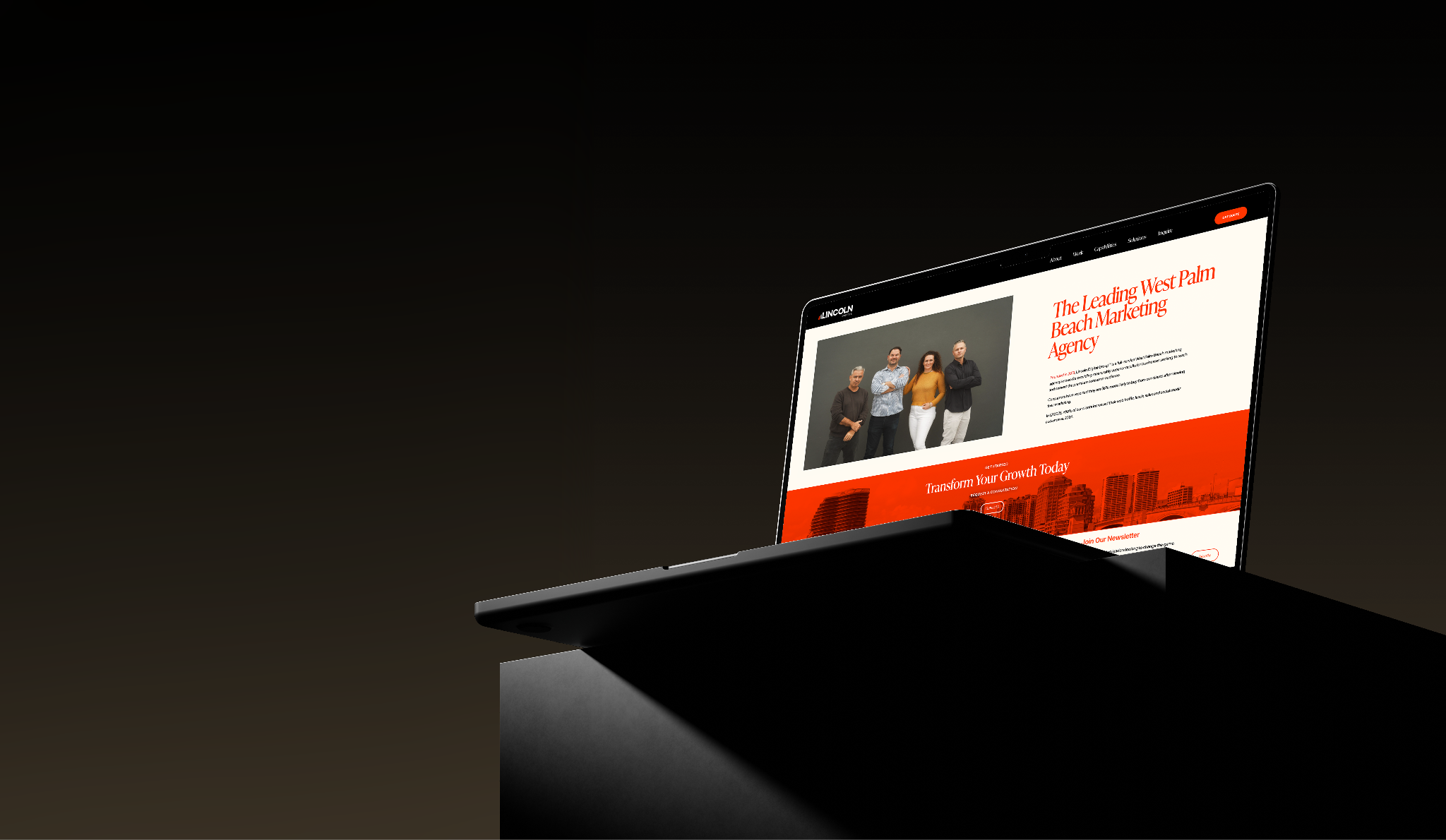
Lincoln Digital Group builds luxury brand ads around this exact framework — strategic audience definition, premium creative production, disciplined channel selection, and measurement tied to real business outcomes. As a West Palm Beach-based agency serving hospitality, lifestyle, healthcare, retail, and real estate brands since 2013, LDG combines social-first creative and performance marketing under one accountable team, which is why client retention has stayed above 85% since 2022 and 90% of clients grew their investment in the last year.
Luxury brand ads prioritize precise audience targeting, high-quality storytelling creative, and revenue-based measurement over broad reach and volume-driven tactics. The buyer’s decision journey is typically longer and more research-intensive, so the advertising approach has to match that pace and level of consideration.
Performance varies by category, but social-first platforms, connected TV, and high-intent search generally outperform broad display networks for luxury brands because they allow for both visual storytelling and precise targeting. The right mix depends on where the specific target audience actually spends attention.
ROI should be measured by connecting ad spend to qualified leads, bookings, or sales, along with the average value and retention rate of customers acquired — not just cost-per-click or impressions. A solid attribution setup is essential for longer sales cycles common in luxury categories.
Regular testing across creative variations and audience segments is important, but testing should be structured around meaningful business metrics rather than rapid, high-volume A/B testing designed for lower-consideration products. Quality of insight matters more than speed of iteration.
If your current luxury brand ads are producing clicks but not the right customers, it may be time for a framework reset. Contact Lincoln Digital Group at lincolndigitalgroup.com/contact-us/ to talk through a strategy built for how premium buyers actually decide.