
Luxury brand advertising is the discipline of promoting premium products or services in ways that protect exclusivity, reinforce brand equity, and reach high-value consumers without discounting the perceived worth of the offering. Unlike mass-market advertising, it prioritizes craft, scarcity, and emotional resonance over reach and frequency, and it measures success through brand equity and client lifetime value, not just clicks.
Mass-market advertising optimizes for volume: more impressions, more clicks, more conversions at the lowest possible cost. Luxury brand advertising optimizes for perception. Every touchpoint, from a paid social ad to a retargeting email, either reinforces or erodes the sense that a brand is rare, considered, and worth its premium.
This means the usual performance-marketing instincts, discount codes, urgency banners, aggressive frequency, often work against a luxury brand. A five-star hotel or a high-end real estate developer doesn’t need more traffic; it needs the right traffic, arriving with the right expectations, ready to pay full price for a superior experience.
Strong luxury brand advertising rests on three pillars working in concert.
Creative quality. Photography, video, and copy need to feel closer to editorial or cinematic work than to typical ad units. Grainy stock imagery or generic value propositions (“Best Prices!” “Limited Time Offer!”) instantly signal a mismatch with a premium audience.
Channel selection. Luxury audiences respond to context. Paid social placements within premium publisher environments, curated Meta and Instagram campaigns, and connected TV often outperform broad-reach display networks. Search remains essential for capturing high-intent demand, but it needs to be paired with brand-building channels, not run in isolation.
Audience precision. Luxury brand advertising should target based on behavior and affinity, not just demographics. Income data alone is a poor proxy for someone who buys premium goods and services; interest signals, purchase history, and lookalike modeling built from real client data perform far better.
A few warning signs tend to show up quickly when an agency defaults to generalist tactics:
If a proposal reads like it was written for a completely different kind of client, it probably was.
Effective luxury brand advertising follows a sequence, not a shortcut.
Luxury brand advertising typically costs more per impression and per click than mass-market campaigns, and that’s by design. Premium creative production, curated media placements, and smaller, more qualified audiences all carry a higher price tag than broad-reach advertising.
Budgets should account for three cost centers: creative production (photography, video, copywriting), media spend (paid social, search, programmatic, and any premium placements), and measurement infrastructure (analytics, attribution, and reporting tools). Agencies that quote a single “media budget” without separating these often underinvest in the creative quality that luxury advertising depends on.
South Florida, particularly West Palm Beach, Palm Beach Gardens, Boca Raton, and Riviera Beach, has one of the densest concentrations of luxury hospitality, real estate, retail, and healthcare brands in the country. That density creates a highly competitive advertising environment where generic campaigns get lost fast.
An agency based in this market understands the seasonal rhythms of South Florida’s affluent consumer base, the visual language that resonates with this audience, and how local competitive pressure shapes media strategy. That local fluency, paired with strategic rigor, is what separates advertising that merely runs from advertising that moves the needle.
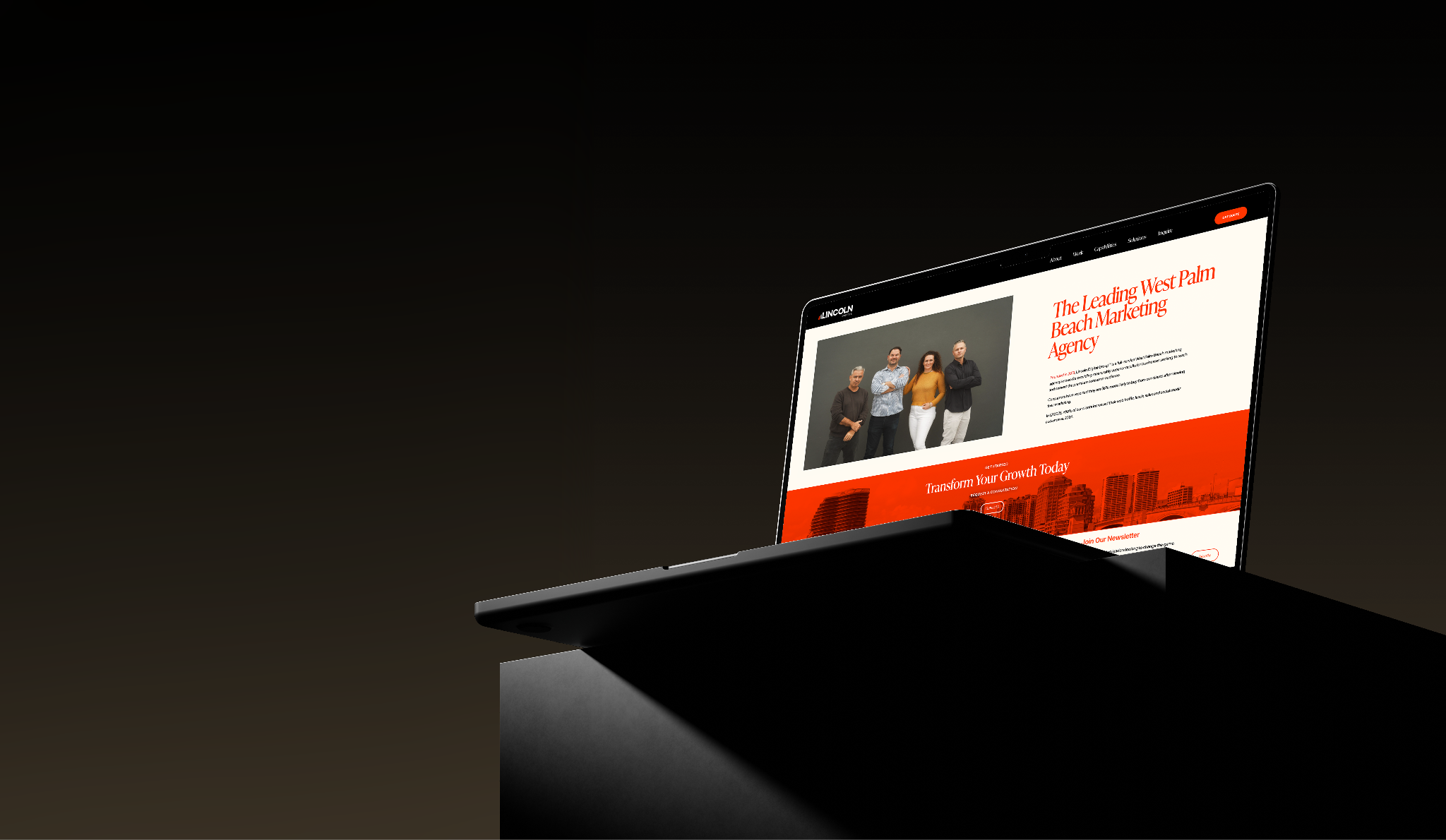
Lincoln Digital Group has spent over a decade building that fluency, working with premium hospitality, lifestyle, healthcare, retail, and real estate brands throughout South Florida. The agency’s approach pairs strategic vision and branding with performance marketing, so campaigns protect brand equity while still delivering measurable results, a balance that keeps client retention above 85% since 2022.
Luxury brand advertising is the practice of promoting premium products or services through creative, channels, and targeting that reinforce exclusivity and brand equity rather than chasing volume. It prioritizes perception and long-term brand value alongside measurable performance.
Regular digital advertising typically optimizes for the lowest cost per click or conversion. Luxury brand advertising optimizes for the right audience and the right perception, often accepting a higher cost per acquisition in exchange for protecting brand positioning and attracting higher-value customers.
Budgets vary widely by industry and goals, but luxury brands should plan for meaningful investment in creative production alongside media spend, since generic creative undermines even a well-targeted campaign. A qualified agency can build a phased budget based on current brand awareness, competitive intensity, and revenue goals.
An agency embedded in a luxury market, like South Florida, understands the local audience, seasonality, and competitive landscape in ways a generalist national agency often doesn’t. That local insight typically translates into sharper targeting and creative that actually resonates.
If your brand is ready to advertise like the premium experience it delivers, Lincoln Digital Group can help you build a strategy that protects your positioning while driving real, measurable growth. Visit lincolndigitalgroup.com/contact-us/ to start a conversation with our team.