Marketing solutions are the combined set of strategic, creative, and technical services — branding, SEO, paid media, web design, and measurement — that a business uses to attract, convert, and retain customers. The right mix depends on your industry, budget, and growth stage, but the goal is always the same: turn marketing spend into predictable revenue.
The phrase gets used loosely, which is part of the confusion. In practice, marketing solutions typically span five categories: brand strategy and positioning, content and creative production, performance marketing (SEO, paid social, PPC), web design and user experience, and analytics or attribution. A vendor selling “marketing solutions” might specialize in just one of these, or offer all five under one roof. Before you evaluate any provider, get clear on which of these your business actually needs right now versus later.
Premium and high-value-consumer brands — think hospitality groups, healthcare practices, or luxury real estate developers — usually need more than a single tactic. A beautiful website with no paid social strategy behind it won’t fill reservations. A strong ad campaign pointing to a dated, slow website won’t convert. Marketing solutions work as a system, not a menu of à la carte items.
Not every agency or freelancer offering “marketing solutions” delivers the same value. A few criteria separate the credible options from the rest:
If a provider can’t answer these plainly, that’s a signal to keep looking.
A few patterns tend to predict a bad engagement. Watch for agencies that lock you into long contracts before showing any strategy, that quote a flat monthly retainer without explaining deliverables, or that talk exclusively about “leads” without discussing conversion quality or revenue impact. Also be cautious of any provider unwilling to share client examples or reference contacts — in a mature market like South Florida, reputation is easy to verify.
Pricing for marketing solutions varies widely because scope varies widely. The biggest cost drivers are the number of channels involved (SEO alone costs less than SEO plus paid social plus web design), the complexity of your industry (healthcare and real estate often require more compliance-aware creative and longer sales cycles), and whether you need ongoing management versus a one-time project. Businesses budgeting for a full-service approach in South Florida typically see monthly investment scale with the number of active channels and the size of the target market — Palm Beach County alone is a very different buy than a statewide Florida campaign.
Marketing solutions for a business in West Palm Beach, Palm Beach Gardens, or Boca Raton look different than a generic national playbook. Local search behavior, seasonal tourism cycles, and a highly competitive premium-consumer landscape all shape what “effective” looks like here. A hospitality brand competing for winter-season guests, or a healthcare practice targeting affluent Palm Beach Gardens residents, needs marketing solutions built around local intent — not a template pulled from a national franchise account.
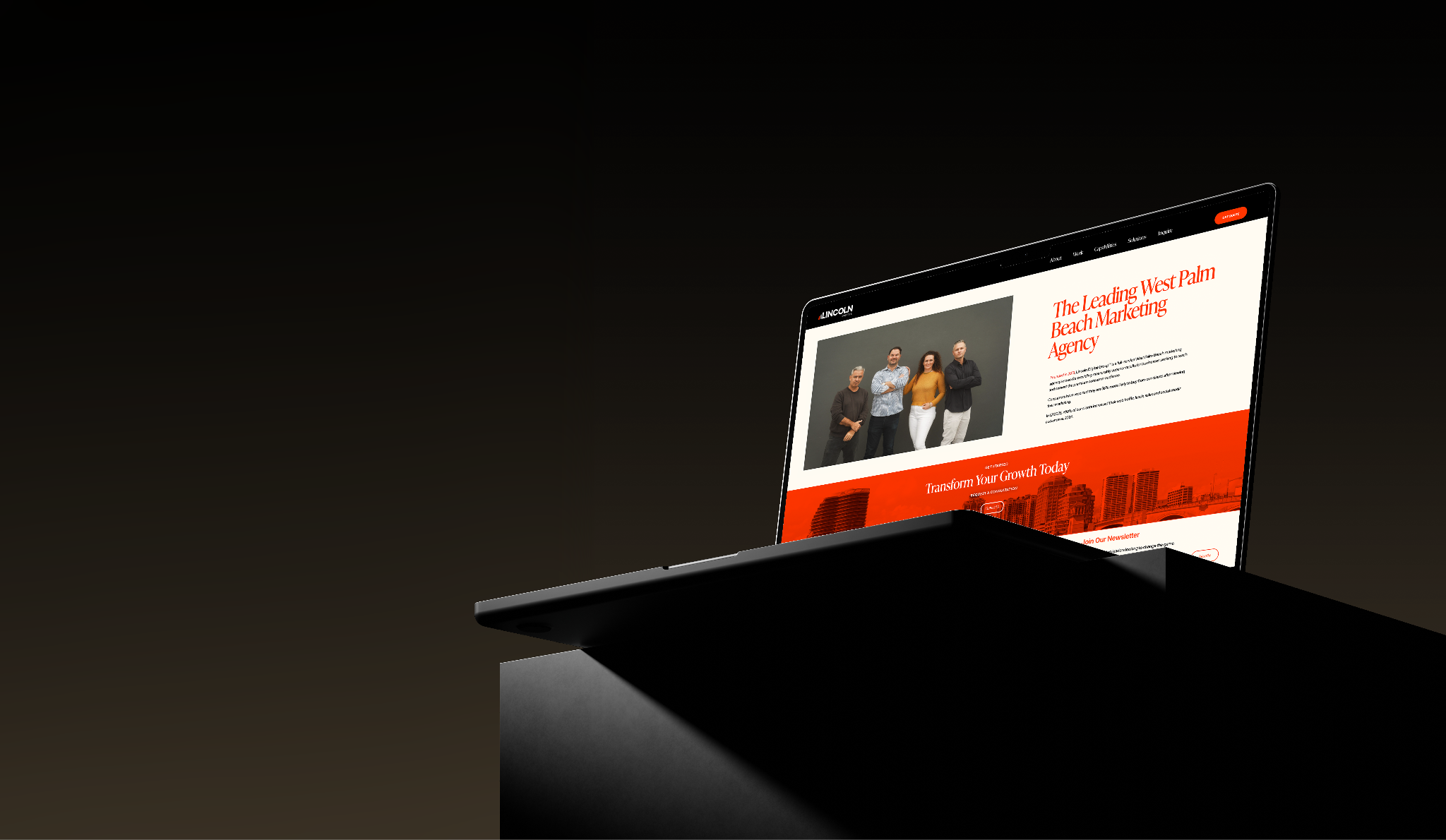
Lincoln Digital Group has built marketing solutions for premium and high-value-consumer brands across South Florida since 2013 — spanning hospitality, healthcare, retail, real estate, and lifestyle. The agency’s approach connects brand strategy, social-first creative, SEO, paid media, and web design under a single measurement framework, so clients see how each channel contributes to actual revenue, not just clicks. Since 2022, client retention has exceeded 85%, and 90% of clients grew their investment in the past twelve months — a sign that the model produces results clients trust enough to scale.
Digital marketing usually refers specifically to online channels like SEO, paid social, and PPC. Marketing solutions is a broader term that can include digital channels plus brand strategy, offline creative, web design, and measurement — essentially the full system needed to grow a business, not just its online presence.
Cost depends on scope, but most businesses should expect monthly investment to scale with the number of channels active and the competitiveness of their market. A single-channel engagement (SEO only, for example) costs less than an integrated program spanning SEO, paid social, and web design.
Foundational work like brand strategy and website updates can show early signals within 60-90 days, while SEO and organic growth typically take three to six months to compound. Paid social and PPC can generate measurable results within the first few weeks, which is why an integrated approach balances short-term and long-term channels.
It depends on your growth stage. A business with a strong brand and website but no paid traffic may only need performance marketing. A business rebranding or entering a new market usually benefits from a more integrated approach that starts with strategy before spend.
If you’re evaluating marketing solutions for a premium brand in South Florida, Lincoln Digital Group can show you exactly how strategy, creative, and performance marketing come together to grow your business — not just your impressions. Visit lincolndigitalgroup.com/contact-us/ to start the conversation.