
A paid social marketing agency manages and optimizes paid advertising across platforms like Meta, Instagram, TikTok, and LinkedIn to generate measurable leads and revenue rather than just impressions and clicks. Premium brands vetting an agency should ask pointed questions about strategy, targeting, budget efficiency, and reporting before committing spend — because paid social done poorly wastes budget fast, and done well, compounds.
Paid social for a mass-market product and paid social for a premium hospitality, healthcare, real estate, or lifestyle brand are not the same discipline. Premium brands typically have smaller, higher-value target audiences, longer or more considered purchase decisions, and brand standards that can’t tolerate low-quality creative or off-brand messaging just because an algorithm favors it. The questions below reflect what a premium brand should actually be asking before choosing a paid social marketing agency.
A capable agency should explain how they identify and reach a smaller, higher-value audience rather than optimizing purely for reach or cost-per-click. That includes lookalike modeling based on real customer data, geographic and demographic layering appropriate to a luxury or considered-purchase buyer, and retargeting sequences that respect a longer decision timeline. An agency that gives a generic answer about “targeting interests and demographics” likely hasn’t worked with premium accounts before.
Ask how the agency decides budget allocation across platforms and campaign objectives, and how frequently they review and adjust spend. A strong agency reviews performance regularly — often weekly during active campaigns — and can explain specific examples of reallocating budget away from underperforming placements toward what’s converting. Vague answers about “constant optimization” without specifics are a signal to dig deeper.
Request a sample report before signing. It should go beyond impressions, reach, and click-through rate to show cost per lead, cost per acquisition, and — ideally — connection to actual bookings, inquiries, or revenue through proper attribution. An agency unwilling to share a real reporting example, or one whose sample report only shows vanity metrics, isn’t set up to prove ROI.
Paid social performs best when it’s not siloed. Ask whether the agency amplifies organic content that’s already proven to resonate, and whether paid social strategy is coordinated with SEO and broader performance marketing efforts. An integrated approach typically produces stronger efficiency than paid social run in isolation from the rest of a brand’s marketing.
Paid social creative for a premium brand needs a different visual bar than the fast, disposable content that works for lower-cost products. Ask to see paid creative examples specifically, not just organic content, and evaluate whether the production quality, messaging tone, and offer structure match the standard your brand needs to maintain.
Be cautious of agencies that guarantee a specific return on ad spend before understanding your business, since paid social performance depends on many variables outside the agency’s direct control, including your offer, pricing, and market conditions. Also watch for agencies unwilling to share real client examples, agencies that outsource ad management to a subcontractor without disclosure, and contracts with no defined reporting cadence.
Paid social agency fees typically combine a management fee with actual ad spend, and premium brands should expect management fees to reflect the complexity of targeting, creative production, and reporting required for a considered-purchase audience. Ad spend budgets vary significantly by industry — a real estate developer selling a limited inventory of high-value units has different spend needs than a hospitality brand driving frequent reservations.
Paid social campaigns for businesses in West Palm Beach, Palm Beach Gardens, Boca Raton, and Riviera Beach need to account for seasonal tourism swings, a highly competitive premium consumer market, and local audience behavior that a national or offshore agency may not understand as precisely as a locally based team.
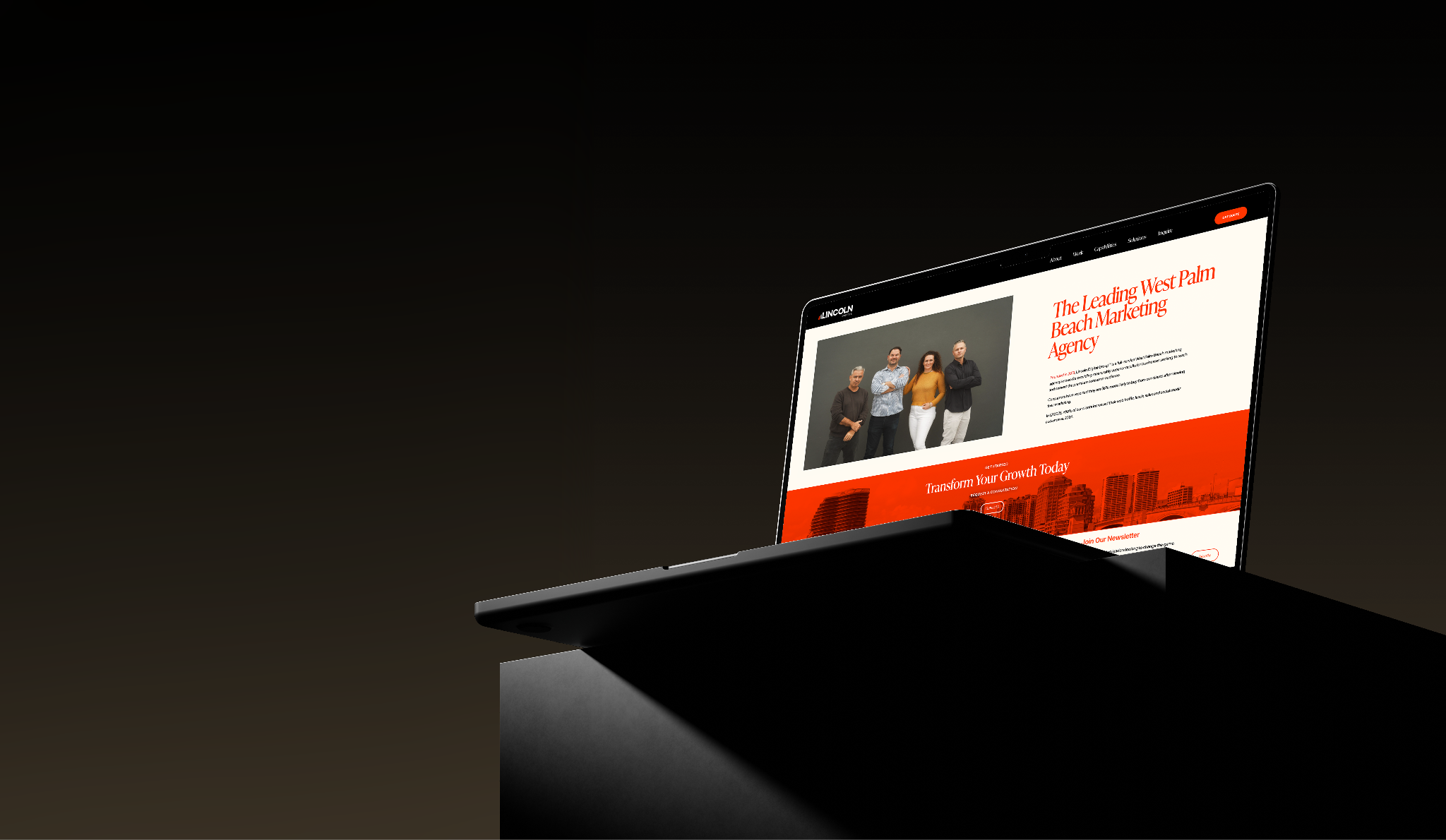
Lincoln Digital Group has managed paid social and performance marketing for premium South Florida brands since 2013, including Stiebel Eltron, Nora West Palm, and Cove Club. Paid social campaigns are built as part of an integrated strategy connecting SEO, organic social, web design, and measurement/attribution — the exact integration premium brands should be asking about — and that approach has helped drive client retention above 85% since 2022, with 90% of clients increasing investment in the past year.
Budgets vary by industry and goals, but premium brands should expect to combine a management fee with meaningful ad spend, since reaching a smaller, higher-value audience with quality creative typically costs more per lead than mass-market campaigns.
Most campaigns need two to four weeks of active spend to gather enough data for meaningful optimization, with stronger performance typically emerging over 60 to 90 days as targeting and creative are refined.
Yes, but it requires a longer nurture sequence, retargeting strategy, and patience with a longer conversion window compared to lower-cost, impulse-driven products.
No. Paid social generally performs best when coordinated with organic content and SEO, since paid budget can amplify content already proven to resonate and reinforce a consistent brand presence across channels.
Choosing a paid social marketing agency starts with asking the right questions about targeting, budget, creative, and reporting. Lincoln Digital Group has answered these questions for premium South Florida brands since 2013. Visit lincolndigitalgroup.com/contact-us/ to start the conversation.