
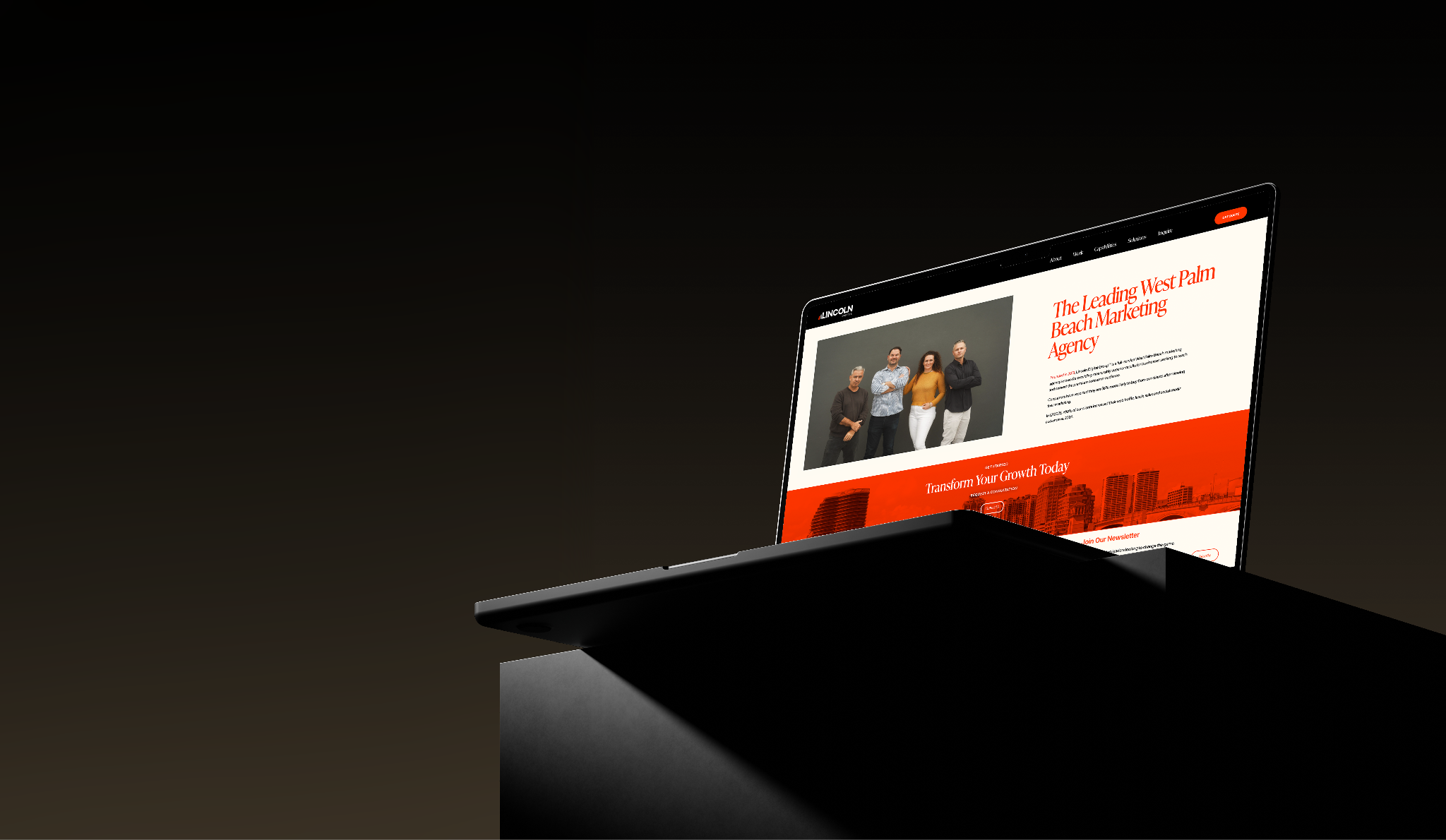
Palm Beach web design is the process of planning, designing, and building a website that reflects a premium brand’s positioning while converting visitors into qualified leads or bookings. Done well, it connects visual craft with UX strategy, SEO, and measurement so the site functions as a pipeline, not just a digital brochure.
Too many web design projects in South Florida start and end with aesthetics. A beautiful homepage gets approved, the site launches, and then nothing happens: no lead flow, no measurable lift in bookings, no clear path from visitor to customer.
Palm Beach web design done right treats the website as the center of the marketing ecosystem. Every page has a job: converting search traffic, supporting a paid social campaign, answering a prospective client’s questions before they ever pick up the phone. Visual design matters enormously for premium brands, but it has to be paired with a UX strategy built around how real visitors actually behave.
When comparing options for Palm Beach web design, a few criteria separate agencies that build pipeline from those that build portfolios.
Strategic discovery. Serious web design starts with research: competitive analysis, audience interviews or personas, and a clear map of the buyer journey. Skipping this step almost always shows up later as a site that looks good but underperforms.
Conversion-focused UX. Navigation, page hierarchy, and calls to action should be designed around measurable outcomes, form submissions, phone calls, reservation requests, not just visual flow.
Technical SEO foundation. Site speed, mobile responsiveness, structured data, and clean information architecture all affect whether a site can even be found. Design and SEO can’t be separated into different phases handled by different vendors without real coordination.
Content strategy. Copy, imagery, and messaging need to reflect brand voice while also answering the questions premium buyers are actually searching for.
A few signals tend to predict a disappointing web design engagement:
Palm Beach’s premium hospitality, real estate, healthcare, and retail brands can’t afford a website that gets forgotten the day it goes live.
A well-run project generally follows five stages.
Website costs vary based on scope, but a few factors consistently drive the investment required: the number and complexity of page templates, custom photography or video production, integrations (booking systems, CRM, reservation platforms), and the depth of the discovery and strategy phase.
Agencies quoting a flat, low price with no discovery phase are often building from a template with minimal customization. For premium brands, the higher upfront investment in strategy and design typically pays back through better conversion rates and lower long-term maintenance costs.
West Palm Beach, Palm Beach Gardens, Boca Raton, and Riviera Beach are home to a dense concentration of luxury hospitality, real estate, healthcare, and retail brands, all competing for the attention of a sophisticated, high-net-worth audience. A generic national web design template rarely resonates with this market’s visual expectations or its buyer behavior.
A South Florida-based partner understands the seasonality of local demand, the visual cues that build trust with this audience, and how competitors in the same zip codes are positioning themselves online. That local context shapes smarter design decisions than a remote agency working from assumptions.
Lincoln Digital Group has designed and built websites for premium South Florida brands across hospitality, lifestyle, healthcare, retail, and real estate since 2013, pairing strategic UX with performance marketing so every site is built to generate pipeline from launch day forward. That integrated approach is a core reason 90% of LDG clients increased their investment with the agency over the past 12 months.
Costs depend on scope, page count, custom design and photography needs, and integrations like booking or CRM systems. A discovery-first agency can provide a realistic range once your goals and requirements are defined, rather than quoting a flat price before understanding the project.
Most premium website redesigns take between eight and sixteen weeks, depending on the complexity of design, content, and integrations. Projects that skip discovery or strategy often move faster upfront but require costly revisions later.
Yes, when it’s built around conversion-focused UX, clear calls to action, and technical SEO, not visual design alone. A site built only for aesthetics without a UX and content strategy behind it rarely moves the needle on lead volume.
It helps significantly. When design, SEO, and performance marketing are coordinated by the same team, the site is built from day one to support paid campaigns and organic search, rather than needing retrofits after launch.
If your current site looks the part but isn’t generating pipeline, Lincoln Digital Group can help you build one that does both. Visit lincolndigitalgroup.com/contact-us/ to start the conversation.